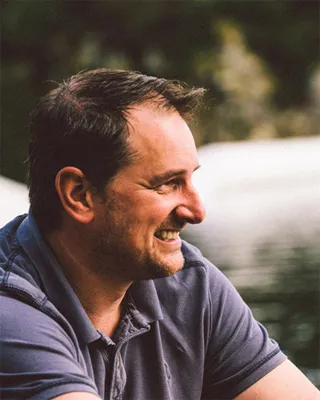
I have spent more than 25 years designing systems, building businesses and improving the operational machinery behind them. The common thread is simple: technology only matters when it changes what an organisation can do.
“I understand technology best when I can follow it all the way from an idea to its consequence.”
Chapter 01 / Make
Build Learn by making it real.
Making something is still how I find out what I actually think.
My earliest route into digital work came through a physical operating setting. From 1992 to 1999 I taught and worked in sailing and watersports at Windsport. Enquiries, the website and practical systems around the operation became an early route into digital work.
From there I moved steadily towards whole operating environments: purchasing, stock, fulfilment, CRM, pricing, marketing, reporting and the connective tissue between them.
Each build made the model more concrete. Assumptions that sounded tidy in a meeting became visible in the interface, the data and the awkward edge case somebody met at the end of a long day.
I like staying close enough to delivery to ship, observe and change the work. Owning the outcome makes the questions sharper: can people understand it, can they recover when it fails, and did it improve the thing it was meant to improve?
Good software matters. So does learning what the software becomes once other people have to depend on it.
Field note / BuildI trust the lesson more when something has shipped and I still own what happens next.
Chapter 02 / Carry
Operate Live with the consequence.
Running systems and a business removed the safe distance between a decision and its result.
I founded and ran a multi-site e-commerce business with eleven staff and roughly £2 million annual turnover. Responsibility extended beyond releases into cash flow, dispatch pressure, customer promises, staff knowledge and the quality of every operational hand-off.
I could not call a feature successful if it made the warehouse harder to teach, hid a stock problem or moved work onto somebody already under pressure. Small rules around priority, validation and exceptions carried real consequences because we had to live with them.
Redesigning picking and packing as one flow moved errors from nearly 6% to 0.02%. The lasting lesson was not the number alone: better systems make careful work easier to repeat.
Operation taught me to look beyond the happy path and ask who carries the cost when a model is wrong.
Field note / OperateI keep asking what this decision feels like at 4.45pm, when the queue is wrong and somebody still has to act.
Route / current / connection
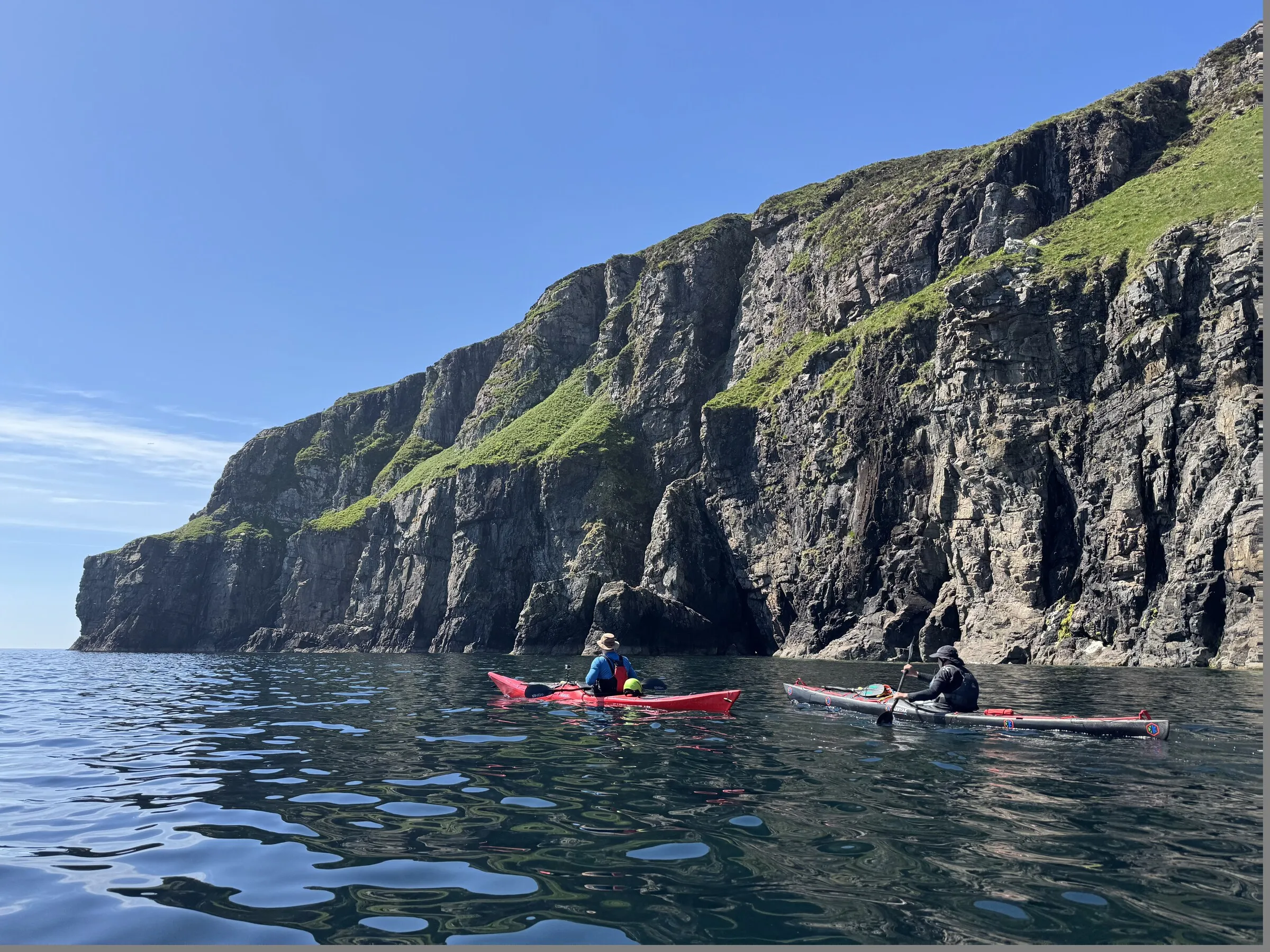
02Scottish Small IslesA week-long kayaking and camping trip around the islands.
Connection 02 / Current, route, options
Preparation
Plan for a changing context.
Thousands of hours of sailing and multiple week-long kayaking and camping trips all begin the same way: route choices, equipment, conditions and people considered before anyone leaves the beach.
None of that preparation predicts the day. It buys the ability to keep going when the day turns out differently — a second landing within reach, food for a night nobody planned to spend out, a group who already know what happens if they get separated.
Attention
Keep reading what is happening.
A plan is only as good as the ability to notice when it has stopped matching the conditions. On the water that means reading wind against tide, watching swell change shape over shallow ground, and being honest about the state of the slowest person in the group.
The failure is rarely the plan. It is carrying on with a plan long after the information needed to question it has arrived. Committing early is often right; committing without noticing is not a decision at all.
In the work
Make the system observable and changeable.
That connection appears in my work as observability, useful options and room to change course. It is practical rather than heroic: know where you are, know what can still be chosen, and keep something in reserve to act on it.
A release nobody can see the effect of, with no way back, is the same mistake as a passage plan with no bail-out. Most of the value sits in deciding, before committing, what would tell you to change your mind.
Chapter 03 / Direct
Guide Preserve choices. Build confidence.
For me, technology leadership means helping people preserve useful choices and move with confidence.
That is different from standing outside a system and producing recommendations. I want direction to survive contact with architecture, data quality, delivery constraints and the people carrying the change.
The work moves between long-horizon decisions and the next practical release. Sometimes confidence comes from committing; often it comes from making a staged, reversible move that creates better evidence.
International membership and event systems sharpened that discipline. Rules around eligibility, consent, payment and entry had to work repeatedly under pressure for more than 50,000 members.
The aim is not to make every decision for people. It is to make the system legible enough that the next decision is theirs to take.
01
Understand the system before changing it.
02
Optimise the whole, not the visible component.
03
Preserve choices that matter; remove complexity that does not.
04
Keep ownership attached to the recommendation.
03Personal archive / competitionCompeting at the Laser Masters Worlds · Hayling Island
Field note / GuideThe useful question is often: which choice must stay open, and what evidence would make the next step clearer?
Chapter 04 / Learn
Explore Return to being a beginner.
In Japan a new driver displays a 初心者 mark for their first year: a small green and yellow badge on the car that says, plainly, I am new at this. It is not an apology. It is information, and everyone around them drives accordingly.
Aikido keeps the same idea inside its grading. The black belt is shodan, and shodan does not mean master. It means first step. You train for years to reach the point at which the learning is considered to have begun.
There is no competition in it and no final form. The same handful of techniques come round again for decades and they never quite settle — a different partner, a different distance, a different mistake to work with. Nobody arrives. That is the appeal rather than the cost of admission.
Underneath the forms, what you are practising is a turn rather than a block. You do not meet the force head on and win. You join it, change its direction and let it spend itself. It takes a long time to stop wanting to resist.
A loaded sea kayak teaches the same thing, less politely. Seven days circumnavigating Kefalonia and Ithaca, with everything we needed inside the boats: food, water, shelter, the lot. You carry your whole world at about four knots, so the packing is a design problem long before it is a physical one — what earns its place, what does two jobs, what you can do without for a week.
You cannot argue with a headwind either. You leave at the hour that makes the tide yours, or you do not leave. The exploring is not the scenery; it is that the route stays a proposal. You settle the day over breakfast, from the wind and the swell, and find out whether the landing you chose off the chart actually exists at the moment you are close enough to see it.
A circumnavigation has the same shape as the grading. You go the whole way round and step out on the beach you left from — the same place, and not the same at all.
Field record / the long way round
Away from the screen
04Greece · first lightLoading the boats at the start of day five rounding Kefalonia & Ithaca.
Writing / Featured practice
The 36-Digit Number That Changed a Warehouse
A warehouse can absorb uncertainty with empty space, or absorb it with labour and move the same stock twice. This is about a third way: representing the future compactly enough to run the building much fuller without making it harder to work.
Run a warehouse half empty and space absorbs bad placement decisions. Run it fuller and people absorb them: stock moves twice, bins become awkward and tomorrow's delivery disrupts today's work.
I wanted a third option — use the warehouse much more fully without making it harder to work. So I stopped treating a bin as empty or full, and started treating it as something with a future. Every product had one too.